Introduction
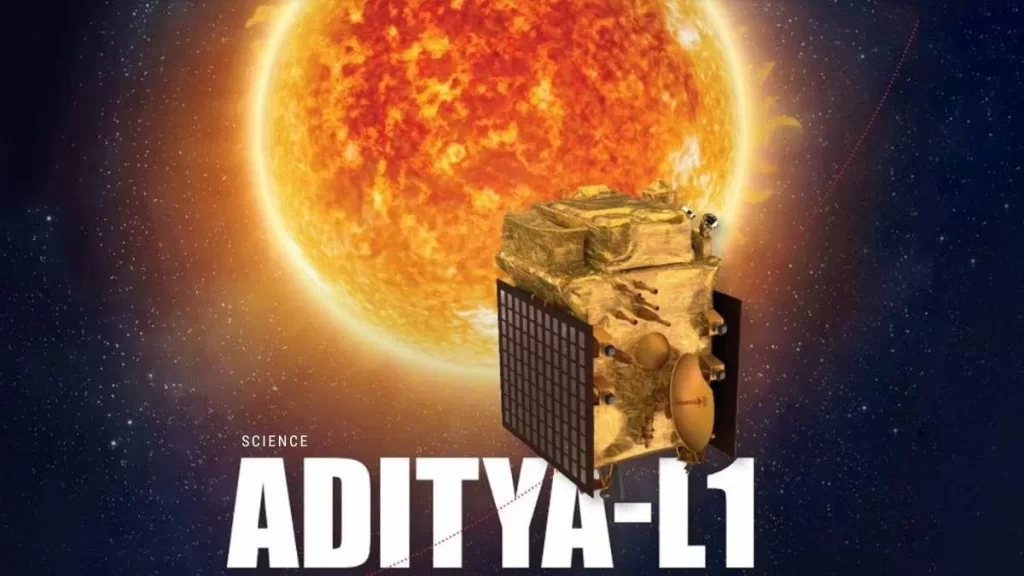
Hey there, space enthusiasts! Today, we’re diving into the captivating world of space exploration to talk about the Aditya L1 mission recently launched by the Indian Space Research Organization (ISRO). Get ready to embark on a thrilling journey to unravel the mysteries of our very own star, the Sun!
Unveiling the Aditya L1 Mission
So, what’s the scoop on this exciting mission? Aditya L1 is India’s very first solar mission, dedicated to studying the Sun from a unique vantage point. The spacecraft will be positioned at Lagrangian point L1, roughly 1.5 million kilometers from Earth, allowing it to have an uninterrupted view of the Sun at all times.
The Sun, Our Enigmatic Star
Our Sun, a massive ball of scorching hot plasma, sits at the heart of our solar system, showering us with light, heat, and life-sustaining energy. Despite its significance, there is still much we don’t know about this fiery celestial body. The Aditya L1 mission seeks to change that by providing us with invaluable insights into the Sun’s behavior, its ever-changing magnetic field, and the mysterious solar storms it occasionally unleashes.
Mission Objectives: Peering Into the Sun’s Secrets
The primary objective of the Aditya L1 mission is to study the Sun’s corona, the outermost layer of its atmosphere. This region, which is hotter than the Sun’s surface itself, remains a puzzle to scientists. By studying the corona, researchers hope to gain a deeper understanding of the extreme temperatures and energy transfers within this vibrant layer.
Additionally, the mission aims to investigate the Sun’s magnetic field and its impact on solar wind and space weather. Solar wind, a stream of charged particles emitted by the Sun, influences the Earth’s magnetosphere and can disrupt communication systems, power grids, and satellite operations. Understanding these phenomena is crucial for predicting and mitigating potential space weather hazards.
The Instruments on Board
To accomplish its scientific goals, the Aditya L1 spacecraft is equipped with a suite of instruments designed to gather valuable data about the Sun. One of the key instruments is the Visible Emission Line Coronagraph (VELC), which will capture high-resolution images of the Sun’s corona and study its dynamics. The mission also carries the Solar Ultraviolet Imaging Telescope (SUIT), which will observe the Sun’s chromosphere – the layer between its visible surface and the corona.
What’s in it for Us?
You might be wondering, “How does this mission benefit me?” Well, understanding the Sun’s behavior and its impact on our planet is crucial for a variety of reasons. By studying the Sun’s magnetic field and space weather, scientists can enhance our ability to forecast solar storms and protect vital communication and navigation systems. Additionally, this mission could potentially lead to advancements in solar energy technologies, opening up new possibilities for sustainable power generation.
Conclusion
The Aditya L1 mission marks a significant milestone for ISRO and India’s contribution to space exploration. As we venture closer to understanding the Sun’s enigmatic nature, we pave the way for a deeper comprehension of our solar system and its intricate workings. So, let’s stay tuned to the updates from this extraordinary mission and unravel the secrets of our magnificent star, the Sun!
Remember, space exploration is not only fascinating but also holds immense potential for our future endeavors. Who knows what other incredible discoveries await us in the vast expanse of our universe? Stay curious, keep exploring, and never stop reaching for the stars!
Until next time, fellow space enthusiasts!
